Herbal medicines are increasingly recognised as valuable tools for improving animal health while supporting efforts to reduce the use of antimicrobials and antiparasitics. However, despite their long tradition of use, only a limited number of herbal veterinary medicinal products are currently available in the European Union. One of the main barriers is the lack of a dedicated regulatory pathway for their registration. To address this challenge, experts from the COST Action MedPlants4Vet developed a transparent, reproducible scoring system to identify medicinal plants with the greatest potential for future simplified registration as HVMPs. More than 100 plant species with documented veterinary use were evaluated using a multidisciplinary framework that integrated regulatory status, pharmacopoeial recognition, toxicological information and sustainability considerations.
The highest-ranked medicinal plants
The assessment resulted in List A, containing 83 priority plant species, and List B, including species that currently lack sufficient evidence or are not considered suitable candidates for simplified registration. (See also "First Lists of HVMP Plants Species Released")
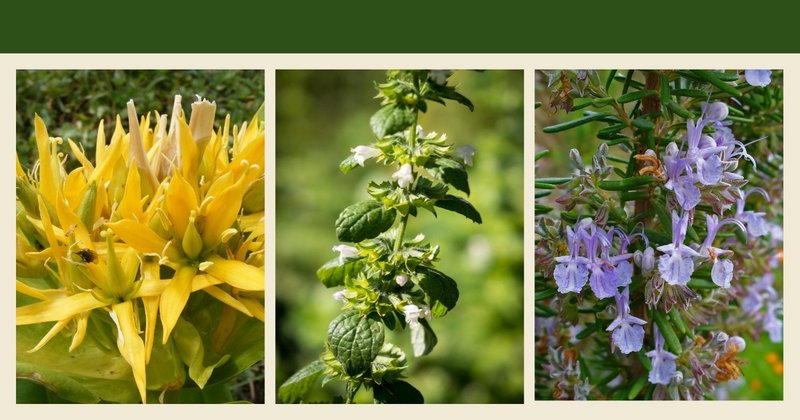
The three highest-scoring medicinal plants, each receiving 16 points, were:
- Gentiana lutea (yellow gentian)
- Melissa officinalis (lemon balm)
- Salvia rosmarinus (rosemary)
Closely following with 15 points were:
- Eucalyptus globulus (blue gum)
- Hypericum perforatum (St. John's wort)
- Juniperus communis (common juniper)
- Matricaria chamomilla (chamomile)
- Mentha x piperita (peppermint)
- Pimpinella anisum (anise)
- Thymus vulgaris (thyme)
Several other well-known medicinal plants also ranked highly, including Althaea officinalis (marshmallow), Carum carvi (caraway), Foeniculum vulgare (fennel), Salvia officinalis (sage), and Urtica dioica (stinging nettle), each with 14 points.
Supporting research, innovation and regulation
Rather than recommending specific treatments, the framework provides a strategic basis for prioritising future research and product development. It helps identify plant species that already have strong regulatory recognition, documented safety profiles and pharmacopoeial support, making them promising candidates for evidence-based veterinary applications.
The authors hope the framework will also support the development of a dedicated European regulatory pathway for herbal veterinary medicinal products, helping translate traditional knowledge into safe, effective and sustainable healthcare solutions for animals.
Publication
Arsenijević, J. et al. (2026) 'Selection of Promising Candidates for Herbal Veterinary Medicinal Products: A Strategic Approach', Planta Medica. Advance online publication. doi:10.1055/a-2891-9080. Thieme E-Journals - Planta Medica / Volltext
 tap and then scroll down to the Add to Home Screen command.